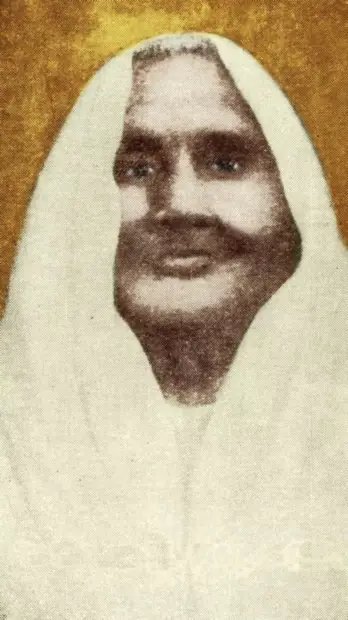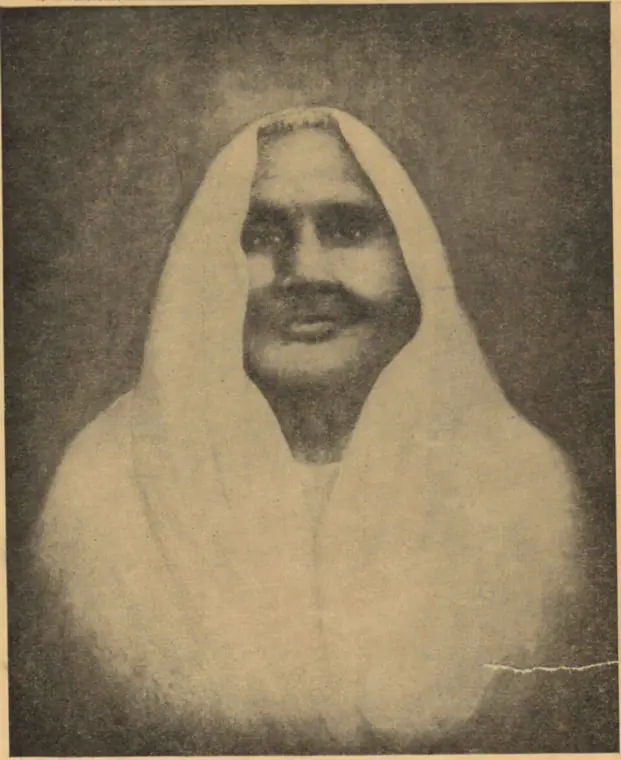
Who was Matangini Hazra?
Matangini Hazra was an Indian freedom fighter from the Medinipur district of Bengal. She was born into a poor peasant household, married as a child, widowed at eighteen, and had no formal education. She held no political office, founded no organisation and left behind no writings. She entered the independence movement in her sixties and was killed by colonial police in her seventies, while walking at the head of a procession during the Quit India Movement.
Her neighbours called her Gandhi Buri — in Bengali, the old lady Gandhi — a name earned by the plainness with which she took up Gandhian practice: spinning khadi, breaking the salt law, joining processions, and going to prison without expecting anything in return.
She matters historically not because she was exceptional in her convictions, but because she is one of the few people of her kind whose name the record actually kept. The independence movement rested on hundreds of thousands of people in her position. Almost none of them are named anywhere.
A life rooted in Bengal
She was born on 19 October 1869 at Hogla, a village close to Tamluk in what was then the Medinipur district of the Bengal Presidency. Her father, Thakurdas Maity, was a poor peasant; the family belonged to the Mahishya community, numerically dominant among the cultivators of the region. There was no question of schooling for a girl in such a household, and she remained unlettered throughout her life.
Tamluk — historically Tamralipta, an ancient port on the Rupnarayan river — gave the subdivision its name and its administrative centre. The countryside around it was rice land, cut by rivers and tidal creeks, densely populated and closely governed through revenue arrangements and a village police system paid for by local levy.
On her birth year. Published sources give both 1869 and 1870, with 19 October recurring as the date. This site follows 1869, while noting the disagreement. The consequence is real: it is why accounts variously describe her as 71, 72 or 73 years old in September 1942.
Personal hardship and historical context
She was married as a child — accounts give her age as around twelve — to Trilochan Hazra of Alinan, a man very much older than she was and already widowed. She was widowed herself at eighteen, and had no children. She returned to Hogla and, from that point, lived on her own.
It is important not to read this as merely sad. In rural Bengal in the 1880s, a childless widow occupied one of the most constrained positions the society had. She had no claim on her husband’s household, limited claim on her father’s, no income, and a set of social expectations that required her to be invisible. Whatever else can be said about the next fifty years of her life, they were lived from that starting point.
What the local record does preserve is that she was known in her neighbourhood for practical help rather than piety: accounts describe her nursing the sick through an outbreak of smallpox in the area, and assisting the households around her. This is the part of her biography that came before politics, and it is the part most often skipped.
Entering the freedom movement
The nationalist movement reached villages like Hogla gradually, through the 1920s and early 1930s, as the Congress organisation extended into rural Bengal. It arrived not as literature — useless in a village where most people could not read — but as activity: meetings, processions, the spinning wheel, and campaigns against specific, locally felt impositions.
Accounts place her decisive entry in 1932, when she joined a Civil Disobedience procession. She was then in her early sixties. She was not recruited into leadership and did not seek it; she joined the ranks.
Gandhian influence and civil disobedience
Her participation took the standard Gandhian forms, and she took them seriously.
- The salt law. She took part in making salt at Alinan in defiance of the colonial salt monopoly. She was arrested, and released shortly afterwards.
- The chowkidari tax. She joined the agitation against the levy that funded the village watchman — a tax that fell directly on cultivators and had become a focal point of rural non-cooperation. For this she was sentenced and served six months at Baharampur jail.
- Khadi. After her release she became an active member of the local Congress and spun her own cloth, continuing to do so as her eyesight failed.
- Serampore, 1933. She attended the subdivisional Congress conference at Serampore and was injured in a police baton charge. Accounts also describe her taking part in a black-flag protest against the Governor of Bengal, Sir John Anderson.
None of this made her nationally known. It made her a recognised local participant — which is exactly what the movement in Medinipur was built from.
The road to 1942
On 8 August 1942 the Congress passed the Quit India resolution. Within hours the British administration arrested the national leadership. What followed was therefore not a directed campaign but a set of local responses, improvised by district organisations that had lost contact with the centre.
In Medinipur the response was unusually far-reaching. Congress workers set out to take over the machinery of colonial administration itself — police stations, courts, and government offices — rather than to protest outside it. Volunteer batches were organised, roads and communication lines were cut on the night of 28 September to slow reinforcements, and simultaneous actions were planned at several centres for the following morning.
The Tamluk march
On the morning of 29 September 1942 a procession of roughly six thousand people — a large proportion of them women volunteers — moved toward the police station and administrative buildings at Tamluk. Matangini Hazra, then in her seventies, was at its head. Comparable actions took place the same day at Mahisadal and Sutahata.
At the edge of the town the police ordered the procession to disperse under Section 144 of the Code of Criminal Procedure. Accounts describe Matangini Hazra stepping forward ahead of the crowd and appealing to the police not to fire on it. She was shot.
The contemporary nationalist paper Biplabi reported that she continued to advance holding the tricolour, that she was struck again, and that she was wounded in the forehead and in both hands. Accounts agree that she went on calling Vande Mataram, and that she died without letting the flag fall.
Nine other people were killed at Tamluk that day, including two boys aged thirteen and fourteen. Further deaths followed at Mahisadal and at Nandigram.
What is not established. No verified first-person quotation from Matangini Hazra is known to survive — no speech, no letter, no recorded conversation. Any dialogue attributed to her in popular retellings should be treated as invention. Sources also differ on the number of shots fired and on her exact age. This site does not resolve those disagreements by picking the most dramatic version.
A symbol of courage
Her death had an immediate political effect in the district. The Tamralipta Jatiya Sarkar — the Tamluk National Government — was constituted on 17 December 1942 as a parallel administration for the Tamluk and Contai subdivisions. It ran courts, a relief apparatus, a postal arrangement and an armed wing, the Bidyut Bahini, under Sushil Kumar Dhara, with Satish Chandra Samanta as its head. It functioned until 8 August 1944, when it was wound up at Gandhi’s request. It remains the longest-running parallel government of the Quit India period.
When it organised relief after the catastrophic cyclone of 16 October 1942 — work the colonial administration largely failed to do — it was acting as a government in more than name.
Her place in India’s historical memory
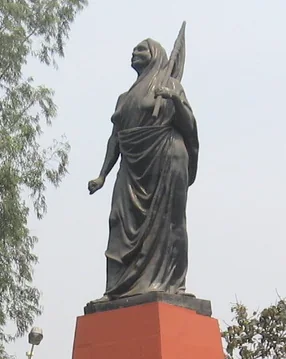
In 1977 a statue of Matangini Hazra was raised in Kolkata — reported as the first statue of a woman erected in the city in independent India. A memorial also stands at Tamluk near the place where she was killed. In 2002 the Indian postal department issued a five-rupee stamp bearing her image, marking sixty years of the Quit India Movement and the Tamluk National Government. A government degree college for women at Tamluk carries her name.
The risk in all of this is that commemoration flattens her. Rendered only as a statue with a flag, she becomes an emblem, and an emblem teaches nothing. The more useful way to hold her memory is as evidence: evidence that the independence movement was carried by people the society around them had written off, and that it could not have succeeded otherwise.